
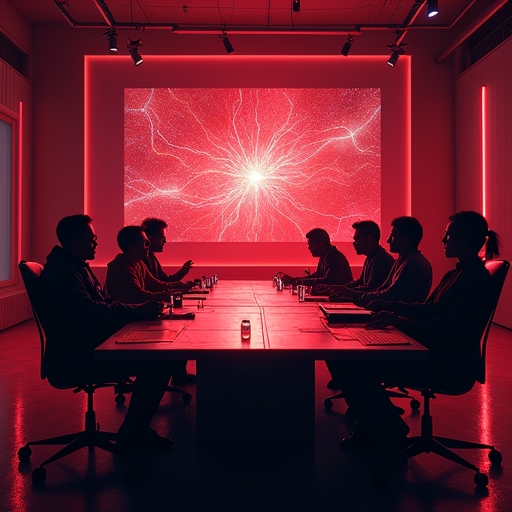
Netflix releases new generative AI rules for filmmakers
Netflix’s generative AI rules mark a pivotal moment in the relationship between artificial intelligence and the entertainment industry. By formalizing a clear set of guidelines, Netflix is sending a message to filmmakers, writers, and animators about how AI-driven technology can be responsibly utilized in the production of original content. These rules don’t just highlight ethical frameworks; they also attempt to balance the creativity of humans with the efficiency and potential of machine learning tools. For filmmakers, this is both an opportunity and a challenge — one that is already sparking debate across Hollywood and beyond.
The growing role of generative AI in entertainment
Over the past two years, generative AI in film production has surged in relevance. Tools capable of generating scripts, developing visuals, or replicating voices have become increasingly sophisticated. For production studios, these new technologies present an enticing prospect: faster turnaround times, reduced overhead costs, and the ability to experiment with creative ideas without exhausting resources. However, the same tools raise legitimate concerns around intellectual property, originality, and the displacement of human jobs. Netflix’s rules are, in many ways, a direct response to these discussions. Rather than ignoring the AI wave, the platform is actively attempting to channel it in ways that are both innovative and compliant with industry standards.
What Netflix’s guidelines actually mean
One of the defining aspects of Netflix generative AI guidelines is their focus on transparency. Instead of allowing AI-driven content to slip by unnoticed, Netflix requires clear disclosure when AI tools are used in the creative process. This ensures that collaborators, audiences, and ultimately regulators have a better understanding of how AI is shaping artistic output. Filmmakers must also prove that the content generated by AI respects copyright laws, avoids plagiarism, and does not infringe on intellectual property rights. By setting these ground rules in advance, Netflix is hoping to prevent legal battles before they arise — a move that many in Hollywood see as a pragmatic choice.
Another significant element of these rules is how they address collaboration. Netflix emphasizes that AI should serve as a support tool for human creativity, not as a replacement. This stance is especially important in light of the recent strikes by screenwriters and actors, who voiced concerns about studios leveraging AI to replace skilled professionals. Netflix’s framework reassures creatives that human input remains central to storytelling, while still allowing AI to play a role in optimizing production workflows.
Balancing innovation with ethical responsibility
The entertainment business thrives on innovation, but it also depends heavily on trust. With audiences increasingly aware of deepfakes, synthetic voices, and AI-generated visuals, transparency becomes key to maintaining credibility. Netflix’s decision to openly publish these guidelines instead of keeping them internal shows a recognition of the broader societal implications of generative AI. It also positions the company as a leader in setting ethical benchmarks for the streaming industry.
At the same time, Netflix acknowledges that innovation cannot be stifled. AI technology is advancing rapidly, and competitors are also experimenting with its application in production settings. The balance lies in accepting change while establishing responsible safeguards. By promoting collaboration between human artistry and machine intelligence, Netflix is attempting to pioneer a hybrid model of filmmaking that maximizes creativity while preventing exploitation.
Industry reactions to Netflix’s AI stance
The reaction within creative circles has been mixed but largely positive. Filmmakers, writers, and editors understand that AI is here to stay and that banning it outright would be an unrealistic solution. What Netflix has offered instead is a roadmap for smart integration — one that acknowledges artistic value while embracing technology. Many creators see this as an opportunity to experiment with AI for storyboarding, pre-visualization, or production planning without undermining their own creative voice. Others remain cautious, pointing out that even with guidelines, AI can gradually shift power dynamics in favor of studios rather than individual creators.
The greater entertainment industry is watching keenly. If Netflix’s policies succeed, other platforms and studios are likely to adopt similar frameworks, eventually creating an industry-wide standard. Already, tech companies and consulting firms specializing in AI are being approached for expertise on how to responsibly implement generative AI in creative workflows. Resources like AI consulting services are playing a growing role in helping organizations navigate this transition without missteps that could harm either their brand or their legal standing.
Legal and regulatory implications
Legal concerns remain one of the most significant hurdles for widespread adoption of artificial intelligence in film. Copyright infringement can occur unintentionally if algorithms train on protected material without permission. Netflix’s guidelines are proactive in addressing this issue by requiring creators to ensure compliance with copyright law when using AI. This is a crucial safeguard, considering lawsuits have already emerged against AI companies accused of misusing copyrighted data. By codifying these standards, Netflix is protecting itself and its filmmakers from potential litigation that could disrupt production pipelines.
Regulatory bodies around the world are also beginning to pay attention. Governments are debating how best to legislate AI’s role in creative industries, and transparency rules may soon become mandatory. Netflix’s approach can therefore be seen as both ethically driven and strategically protective, ensuring that the company stays ahead of future legal requirements. It is not just about internal practices but also about setting the tone for how AI-driven creativity will coexist with established intellectual property law.
The cultural impact of AI-driven storytelling
Beyond technical and legal questions, cultural factors also shape how the audience receives AI-assisted content. Storytelling is deeply human, rooted in shared experiences and emotional expression. There is a lingering question as to whether generative AI can authentically replicate that human essence without coming across as artificial or formulaic. Netflix’s guidelines indirectly acknowledge this by prioritizing human oversight and creativity as indispensable parts of the content-making process.
For viewers, the knowledge that AI was used responsibly may help build trust in the content they consume. Audiences are savvy — they can often detect when artistic shortcuts are taken. Transparent disclosure not only respects their awareness but also differentiates responsible studios from those attempting to pass off machine-generated work as entirely human-driven. In a world where authenticity matters more than ever, Netflix’s structured approach could help preserve the integrity of storytelling while still leveraging technology’s strengths.
The future of AI in Netflix productions
Looking ahead, Netflix’s generative AI guidelines are likely to evolve as technology itself continues to advance. What feels innovative today may be standard practice tomorrow. The same applies to risks — new ethical dilemmas are bound to emerge as AI grows more sophisticated. Nonetheless, by setting an early foundation, Netflix has ensured that it is ready to adapt without losing sight of core values. Expect more productions to subtly incorporate AI tools, particularly in areas like animation, editing efficiency, and creative experimentation that enhances but does not replace the core human narrative voice.
The success of this initiative will ultimately depend on how well the balance holds between efficiency and authenticity. If Netflix can consistently prove that AI adoption does not diminish opportunity for creatives, then its strategy may not only benefit the platform but also serve as a model for the wider industry. For filmmakers eager to embrace new tools without sacrificing artistic merit, these guidelines offer a blueprint for innovation that respects both creativity and technology.
The evolving partnership between filmmakers and AI
One of the most compelling aspects of this new framework is how it frames the relationship between filmmakers and artificial intelligence. Rather than framing AI as a competitor, Netflix positions it as a collaborator. This alignment emphasizes the idea that human vision drives storytelling while AI supports through efficiency, visualization, and testing new creative possibilities. It promises a future where directors, screenwriters, and animators have greater flexibility without fear of being pushed aside by automation.
For up-and-coming creatives, understanding how to work within these new protocols will be an essential skill. Just as filmmakers once had to adapt to digital cameras or streaming distribution models, today’s generation must learn how to responsibly leverage AI within their artistic toolkit. Used properly, Netflix’s rules encourage experimentation, innovation, and hybrid methods of creation that can bring new storytelling opportunities to global audiences.
As the saying goes, technology cannot replace creativity — but it can amplify it. Netflix’s generative AI rules are striving to prove that in practice. For filmmakers, the message is clear: the future of content creation will be AI-assisted, but still human-led.
For creators, marketers, and studios eager to explore the next chapter of AI integration, partnering with experts who understand both the technological and creative implications can be invaluable. Now is the time to take proactive steps, learn the emerging rules, and position yourself at the leading edge of innovation while safeguarding creative integrity.
“`
