
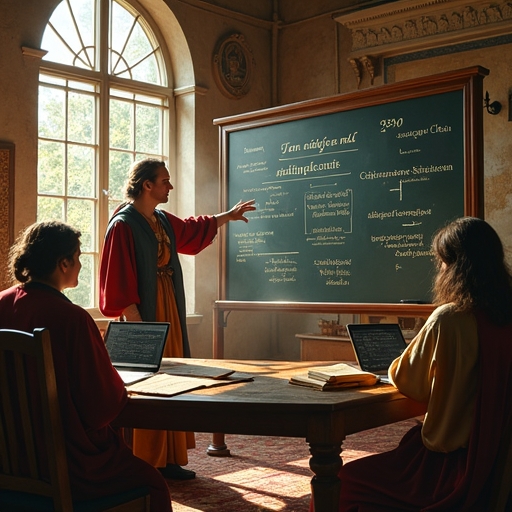
Classical Education Fuels Tomorrow’s AI-Driven Society
Classical Education stands as a beacon of timeless wisdom, bridging the gap between the rich traditions of the past and the high-speed innovations of the future. In an era defined by rapid technological advancements and the rise of an AI-driven society, many educators, policymakers, and thought leaders are rethinking the very foundations of learning. This paradigm shift is fueling debates on how best to prepare future generations for a world where technology augments every aspect of daily life.
The Resurgence of Classical Education in a Digital Age
At the heart of the modern education conversation is the recognition that classical education offers more than the usual curriculum. It instills critical thinking, analytical reasoning, and a deep appreciation for history and literature – skills that remain indispensable in a world where AI is evolving rapidly. Rather than discarding the lessons of the past, educators today find that integrating classical methods with modern technology can produce well-rounded, adaptive students who thrive amidst change.
Balancing Traditional Learning with Modern Technologies
In the midst of an evolving educational landscape, the challenge lies in merging time-tested methods with the latest digital tools. Classical education emphasizes the liberal arts, offering a holistic approach that nurtures both the mind and spirit. While technology enhances access to information, it is the rigorous training provided by classical techniques that teaches students how to process and critique that information thoughtfully. As a result, students who engage with a curriculum that honors both the past and the present are better equipped to navigate the complexities of an AI era.
Developing Critical Skills for an AI-Driven Society
To thrive in an age of technological breakthroughs, learners must cultivate skills that are not easily automated. The deep focus on rhetoric, philosophy, and the sciences within a classical education framework builds a sturdy foundation for problem-solving and creativity. These competencies are vital when operating within an AI-driven society, where algorithms and data analytics play increasingly central roles in decision-making. As society leans more on artificial intelligence, the ability to contextualize and question insights generated by technology becomes invaluable.
The Role of Classical Education in Shaping Humanity’s Future
Many pundits posit that the future of education should not solely concentrate on technical skills but must also embrace broader humanistic values. Classical education serves as a counterbalance to the intense focus on STEM subjects by offering lessons in ethics, logic, and artistic expression. Integrating these elements helps create not only proficient engineers and programmers but also thoughtful leaders who can steer their communities with wisdom and ethical judgment. The infusion of such timeless insights into modern curricula signals a clear roadmap for preparing students for the multifaceted challenges of tomorrow.
Interdisciplinary Learning for a Complex World
An increasing number of educators advocate for an interdisciplinary approach, asserting that combining the study of humanities with technological fluency can foster a more comprehensive form of intelligence. This method prepares individuals not only to work with AI technologies but to design, regulate, and ethically govern these systems. A robust background in classical education can inspire innovative thinking, enabling learners to merge technical prowess with philosophical inquiry, ensuring that artificial intelligence serves broader societal goals. Concepts such as aesthetics, culture, and ethics, often overlooked in technical education, become pillars in understanding how humanity’s future will unfold.
Enhancing Empathy and Cultural Understanding
Beyond critical thinking, classical education also emphasizes literary studies, history, and art – subjects that build empathy and deepen cultural understanding. In an increasingly interconnected world, the ability to appreciate diverse perspectives is indispensable. Exposure to foundational texts and historical narratives not only enriches personal character but also builds the capacity for more humane interactions in virtual and real-life environments. Such qualities are crucial in fostering a society where technology and human values coexist harmoniously.
Modern Perspectives on a Timeless Educational Model
Scholars and thought leaders worldwide have begun to reexamine the efficacy of the classical model in a digital context. Modern proponents argue that the enduring principles of classical education provide a sturdy bedrock for contemporary learning. This renewed interest in traditional educational methods underscores a collective ambition to train well-rounded individuals capable of integrating digital tools responsibly and ethically.
Bridging the Divide Between Old and New Educational Paradigms
The intersection of classical education and contemporary innovation is witnessing exciting developments. Educators have started to adopt hybrid teaching methods that incorporate the rigorous disciplines of classical learning with the interactive advantages of modern technology. In doing so, they aim to cultivate digital citizens who are equally versed in the art of debate and the science of computation. Such integrative strategies also pave the way for innovative partnerships between academic institutions and technology firms, furthering the reach of a holistic educational philosophy.
The Future of Education: An Evolving Landscape
As the world moves closer to an era defined by precision algorithms and AI-driven society initiatives, the future of education must adapt accordingly. This transformation is marked by a transition from information consumption to the cultivation of wisdom. In classical education, the emphasis lies on the methods of inquiry rather than just the accumulation of data, preparing individuals to ask the right questions even when answers are provided by rapidly evolving AI systems. This paradigm shift is essential for ensuring that students not only interact with technology but also command it in ways that reflect thoughtful judgment and ethical responsibility.
Integrating AI and Classical Thought: A New Educational Frontier
The rise of artificial intelligence presents both formidable challenges and unprecedented opportunities for educators and learners alike. Integrating classical education principles into an AI-centric curriculum is emerging as a visionary approach to confronting these challenges. By fostering a reflective mindset enriched by history and philosophy, learners can enhance their ability to interrogate the digital narrative that defines our times.
Adaptive Learning Environments and the Transformation of Classrooms
Modern classrooms are evolving into adaptive learning environments where technology provides personalized educational experiences. Within these dynamic settings, the enduring methods of classical education offer a reliable framework for analytical reasoning and ethical behavior. Educators are now tasked with balancing content delivery through online platforms and preserving the vital discussions and debates that are the hallmark of traditional liberal arts education. The result is a robust ecosystem where technology complements classical insights, enabling learners to benefit from both digital interactivity and time-honored pedagogical practices.
AI as a Collaborative Tool in the Classroom
Rather than being viewed as a threat to intellectual tradition, AI is increasingly seen as a powerful collaborative tool that can reinforce the values of classical education. Sophisticated learning management systems, enhanced by AI-driven society capabilities, are providing educators with the means to track progress, discern learning patterns, and personalize instruction. These systems help identify areas where students might struggle, allowing teachers to draw from classical pedagogical methods to offer tailored support and guidance. Furthermore, the integration of AI-powered tools underscores the importance of teaching students to critically analyze and contextualize data, ensuring that technology remains a servant to human inquiry rather than a substitute for it.
Preparing Leaders for an AI-Enhanced World
The influence of classical education extends far beyond individual classrooms, reaching into the broader sphere of leadership in a rapidly evolving global society. As organizations increasingly rely on AI-driven society frameworks to make decisions, future leaders must possess not only a command over technology but also a deep moral and ethical understanding that is best cultivated through a classical education lens.
Ethical Considerations in a Technological Era
Ethical dilemmas, many of which revolve around privacy, data security, and algorithmic bias, underscore the need for a balanced education. The classical approach, with its focus on philosophy, ethics, and the humanities, equips future leaders to tackle these challenges with nuance and compassion. By integrating rigorous inquiry with state-of-the-art technological instruction, society can ensure that ethical considerations remain at the forefront of AI development and deployment. This balanced approach fosters leaders who are capable of discerning the broader societal implications of their decisions, ensuring that progress in technology goes hand in hand with moral accountability.
The Role of Mentorship and Continuous Learning
In an era marked by rapid technological evolution, the importance of mentorship and lifelong learning cannot be overstated. Educational mentors who embrace the benefits of both classical education and modern technologies provide indispensable guidance to those preparing to lead in a digital world. Professional development opportunities, such as exploring AI consulting services, offer avenues for continued learning and growth. These experiences instill a commitment to adaptability and ethical decision-making, ensuring that future leaders are poised to navigate an increasingly complex and interdependent global landscape.
Exploring Broader Implications on Society and Culture
The infusion of classical educational ideals into the fabric of our rapidly digitizing world extends its influence beyond the classroom. At a societal level, these educational practices promote the development of citizens who are not only technologically adept but also culturally informed and ethically responsible. This dual strength is essential when confronting issues such as misinformation, polarization, and the digital divide, which continue to shape public debates and political discourse.
Cultivating a Culture of Inquiry and Debate
One of the enduring legacies of classical education is its ability to foster a culture of inquiry and debate. When students are encouraged to scrutinize ideas rigorously and engage in thoughtful dialogue, they develop a mindset that is invaluable in our current information-saturated era. This critical approach helps counterbalance the sometimes indiscriminate trust placed in automated systems and social media algorithms that drive today’s AI era. In nurturing a community of learned individuals, classical education paves the way for more robust public discourse and informed decision-making at all levels of society.
Revitalizing Community Engagement Through Learning
Furthermore, the integration of classical educational frameworks can reinvigorate community engagement by reminding citizens of their shared heritage and responsibilities. By championing discussions on history, art, and ethics, communities can build stronger bonds and foster local dialogues that reflect a richer, more diverse tapestry of human experience. This approach not only benefits individual learners but also reaffirms the belief that the wisdom of the past can help guide the innovations of tomorrow. In an era characterized by rapid technological change, such an inclusive and reflective educational approach is crucial in ensuring that progress does not come at the cost of cultural and ethical values.
A Call for a Balanced Future in Education
The impending convergence of classical education values and the demands of an AI-driven society represents a call to action for educators, policymakers, and thought leaders alike. By embracing a balanced model that leverages the strengths of both traditional and modern methodologies, society can nurture individuals who are as empathetic as they are innovative, as thoughtful as they are technologically proficient.
Charting a Course Forward
Implementing a curriculum that bridges these two seemingly disparate worlds requires openness to change and a commitment to continuous improvement. Education systems must be agile, ready to adapt their methods to incorporate the best practices of classical thought while simultaneously harnessing the power of modern technology. This evolution is not a rejection of past wisdom but rather an acknowledgment that the future demands an education that is as dynamic as the world it seeks to serve.
Nurturing Resilience in a Time of Rapid Change
Ultimately, the true strength of classical education lies in its ability to cultivate resilience and independent thought among learners. As the world continues to pivot toward an AI era, individuals who are steeped in both the traditions of the past and the innovations of the present will be better prepared to face unforeseen challenges. They will be the ones to lead with insight, balancing technical acumen with the ethical frameworks and creative thinking that have defined human progress for centuries.
By weaving together the threads of classical inquiry and modern technology, society can open new pathways to knowledge and creativity. This reinvigorated approach to education, melding the best of old and new, is not just an academic exercise but a necessary strategy to ensure that the promise of a truly AI-driven society benefits everyone. For those who wish to explore further into how classical methodologies can coexist with modern technological advancements, consider the wealth of insights and expertise available through ongoing avenues such as the AI consulting services available online.
Embrace this evolving narrative and invite continued dialogue on how education can bridge the divide between the enduring values of our past and the promising innovations of our future. Whether you are a teacher, a student, or a lifelong learner, now is the time to explore how a balanced educational approach can empower you to navigate the complexities of a world shaped by dynamic technological forces.
Discover more insights and let your curiosity lead the way—your journey toward a more comprehensive, thoughtful, and innovative future starts with a single step. Explore, learn, and take an active role in shaping an education that prepares everyone for tomorrow’s challenges and opportunities.
